



The EU’s Empowering Consumers for the Green Transition Directive is changing the way brands can communicate sustainability. With a strict crackdown on companies using green terms without evidence, it can be difficult to navigate what and how to communicate. The directive is ensuring that companies who make false or misleading statements will face consequences in the form of fines with some amounting to 4% of a business’ annual gross income.
The main goal of this directive is to tackle greenwashing and empower consumers to make informed, responsible decisions when it comes to their purchasing habits. This goal boils down to ensuring that companies avoid greenwashing – when brands pretend to be sustainable for marketing, but don’t actually make the effort.
The directive came into effect in September 2025, with the deadline for member states to adopt and publish measures that comply with the law passed in March 2026. Looking ahead to the application of initiatives on September 27th 2026, understanding what greenwashing is and how to avoid it is essential.
Why Avoid Greenwashing?
Avoiding greenwashing isn’t merely important to comply with the EU’s new restrictions, but it is also important for your brand’s credibility. All of your communications are a representation of your brand and your values, making it essential that you communicate authentically and genuinely. Below we have outlined the key reasons why greenwashing must be avoided:
- Compliance with EU rules – one of the key elements of avoiding greenwashing is to comply with the new EU directive, and ensure that your company is not faced with any consequences. This means that you cannot use vague sustainable words without concrete evidence that you are actually implementing the steps to become eco-friendly. Learn more about the directive here.
- Builds consumer trust – by ensuring that you communicate honestly and transparency, using evidence and verification systems, consumers can see that your sustainable action is genuine, therefore instilling trust in them and motivating them to support your brand.
- Puts your money where your mouth is – talking about sustainability is one thing, but actually doing the work to become sustainable is an entirely different world that requires hard work and lots of effort. Avoiding greenwashing ensures that everything you communicate, you actually do and thus enables your brand to have a beneficial impact on the global community.
- Enables pride in your efforts – sustainability takes hard work and by walking the walk, not only will consumers see you as reliable, but you can also feel the positive effect those efforts have within your company. Doing the work and implementing these initiatives is not easy and it is something to have pride in.
- Contributes to an eco-friendlier world & supports genuine sustainable action – most importantly, by communicating authentically, your brand is contributing to a more sustainable world. Not only does it encourage other companies to follow in your footsteps, but it ensures that you are leaving the world better than you found it. You are making up for your negative environmental impact and therefore supporting genuine sustainable action.
Our Anti-Greenwashing Checklist
Avoiding greenwashing can be a tricky task, so to make things simple and clear, we’ve created this checklist. Following these steps are essential in communicating reliably and authentically, ensuring brands comply with the EU’s directive.
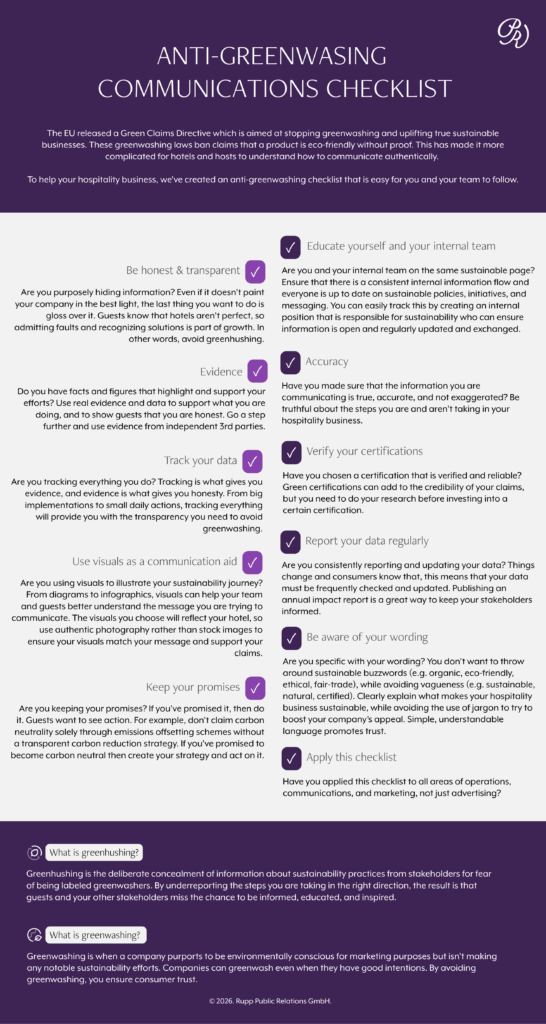
Download the Checklist as a PDF.
Our keys to success:
- Education – nothing is more important than educating yourself on sustainable policies and initiatives to ensure that both you and your team are consistent and informed.
- Evidence – track all your activity, report all your data, and provide your consumers evidence of your actions.
- Verification – verify your findings and certificates through a third party for reliability, trust, and transparency.
The Future of Sustainable Communications
For brands to truly communicate sustainably, it is essential to avoid greenwashing. Knowing what and how to communicate can be tricky to figure out, with many companies committing greenwashing accidentally or unknowingly. With the new EU directive, making the mistake of greenwashing or actively participating in it can have very real repercussions for brands. Learn more about the EU’s new directive here.
We created our checklist as a way to help you understand what greenwashing is and how to avoid it. This checklist is a tool that can be used to keep your branding on track, while communicating authentically and transparency.
Need further help on avoiding greenwashing? Don’t hesitate to reach out to us now!




2 Comments